
Barcelona is one of those cities that grabs you by the collar and refuses to let go. The capital of Catalonia sits on the northeastern coast of Spain where the Pyrenees mountains cascade down to meet the shimmering Mediterranean Sea — a setting so naturally dramatic that it almost feels unfair. This is a city where Roman ruins peek out from beneath Gothic cathedrals, where a 19th-century architect built a church that won't be finished until this very decade, where you can eat world-class seafood at 11pm and still be considered dining early. Barcelona is simultaneously ancient and wildly modern, deeply Spanish yet fiercely Catalan, chaotic yet somehow magnetic in its rhythms.
In 2026, Barcelona remains one of Europe's most visited cities — and for very good reason. The city received over 12 million international tourists in 2025 alone, yet manages to retain a soul that many European capitals have long since surrendered. Its world-famous architecture, vibrant food culture, pulsing nightlife, sun-drenched beaches, and cutting-edge art scene combine to create a travel experience that suits almost every kind of traveller. Whether you are a first-timer overwhelmed by the bucket list, a history enthusiast chasing Phoenician foundations, or a food lover on a mission to eat your weight in jamón ibérico, Barcelona will deliver.
This guide covers everything you need to plan the perfect Barcelona trip — from navigating the crowds at Sagrada Família to discovering neighbourhood bars that locals actually drink in, from budgeting your daily costs to planning day trips into the Catalan countryside.
A City Built on Two Thousand Years of History
Most visitors arrive in Barcelona with Gaudí on their minds, but the city's story began long before the famous architect was born. The area was settled by the ancient Iberians around 500 BCE, but it was the Romans who formally established the city around 15 BCE, calling it Barcino. Roman settlers built the typical grid-pattern colony with a forum, temples, and defensive walls — remnants of which can still be explored today beneath the streets of the Gothic Quarter, in the remarkable underground Museu d'Història de Barcelona (MUHBA).
After the fall of Rome, Barcelona passed through Visigothic hands, was briefly conquered by the Moors in 711 CE, and was then recaptured by Charlemagne's Frankish forces in 801. It became the capital of the County of Barcelona and a powerful medieval maritime city. By the 13th and 14th centuries, the Kingdom of Aragon — with Barcelona as its beating heart — controlled trade routes across the western Mediterranean, from Valencia to Sicily to Athens. The city's magnificent Gothic architecture — the Cathedral, Santa Maria del Mar, and the Palau de la Generalitat — dates from this golden age of maritime empire.
The marriage of Ferdinand of Aragon and Isabella of Castile in 1469 shifted Spain's political centre of gravity toward Castile, and Barcelona's fortunes fluctuated through the following centuries of empire, war, and revolution. The 18th century brought the brutal siege of 1714, when Bourbon forces captured the city after a 14-month resistance — an event still commemorated every September 11th on the Catalan national day, La Diada. Walking through the Ciutadella park today, it is easy to forget that it was built on the demolished homes of thousands of Barcelona residents forcibly evicted to make room for a fortress.
The industrial revolution transformed Barcelona in the 19th century. The city expanded beyond its ancient walls in the famous Eixample district, a grand grid of boulevards that provided the stage for Modernisme — the Catalan Art Nouveau movement that produced Antoni Gaudí, Lluís Domènech i Montaner, and Josep Puig i Cadafalch. This extraordinary flowering of architecture is what most people have come to see, and rightfully so. Understanding its historical roots makes the experience vastly richer.
Gaudí and the Architecture That Changed the World
No city on earth is so defined by a single architect as Barcelona is by Antoni Gaudí (1852–1926). His buildings don't just stand in the city — they seem to grow from it, as if the limestone cliffs of Catalonia dreamed them into existence. Gaudí was a devout Catholic who saw his architecture as an extension of divine creation, drawing inspiration from natural forms: spider webs, bones, cave formations, seashells, coral. The result is an unmistakable organic aesthetic that defies every convention of Western architecture and has never been successfully imitated.
Sagrada Família is the non-negotiable first stop. Gaudí's masterpiece basilica has been under construction since 1882 — and in 2026, the final towers are nearing their historic completion. The central tower of Jesus Christ, at 172 metres, will make Sagrada Família the tallest church in the world when finished. Inside, the forest of branching stone columns filters light in ways that feel genuinely supernatural, and the 10,000 square metres of stained glass — warm amber and gold on the western Passion facade, cool blues and greens on the eastern Nativity facade — create a colour environment unlike anything else in architecture. Book your tickets well in advance: €26–€36 depending on tower access. Arrive at opening time (9am) to see the morning light on the Nativity facade at its most spectacular.
Park Güell was originally conceived as a luxury garden city for 60 homes — a project that failed commercially but gave the world an extraordinary public space. The famous mosaic terrace overlooking the city, the gingerbread gatehouses, and the hypostyle market hall with its forest of tilted Doric columns are all Gaudí designs, tiled in trencadís — the shattered ceramic mosaic technique he pioneered. In 2026, the monumental zone requires a timed ticket (€10); go first thing in the morning. The surrounding park is free and makes for excellent walking.
Casa Batlló on Passeig de Gràcia is Gaudí's most flamboyant residential commission: a shimmering dragon-scaled facade of blue and green ceramic tiles, bone-like balconies, and a roof that ripples like a serpent's spine. The interior tour (€35–€45, with the acclaimed 'Magic Nights' evening experience) takes you through the fluid organic rooms, the extraordinary central light well tiled in 33 shades of blue, and up to the rooftop. Casa Milà (La Pedrera), just two blocks north, is equally essential — its undulating limestone facade (which critics mocked as 'the quarry') and the surreal rooftop of helmet-like warrior chimneys are unforgettable. The evening Rooftop Jazz experience (€35) is one of the most romantic things you can do in the city.
The less-visited Palau Güell, tucked into the Raval neighbourhood, was Gaudí's grand early commission for his patron Eusebi Güell. Tickets cost €12 and queues are minimal compared to his later works. The basement stables with their mushroom-cap columns and the extraordinary parabolic arches of the central hall are Gaudí's genius at its most restrained — before he fully abandoned the rules.
Barcelona's Neighbourhoods: A District-by-District Guide
Barcelona is a city of distinct barrios, each with its own personality, architecture, and social scene. Getting to know them individually is the key to understanding the city as a whole rather than just a collection of attractions.
Barri Gòtic (Gothic Quarter)
The oldest and most atmospheric part of Barcelona, the Gothic Quarter is a warren of narrow medieval lanes where Roman walls meet Gothic archways meet tapas bars. The Barcelona Cathedral presides over the quarter with free entry in the morning and after 5:30pm — don't miss the cloister with its 13 white geese, kept there in memory of the city's 13-year-old martyred patron saint, Eulàlia. The surrounding streets — Carrer del Bisbe with its neo-Gothic bridge, the arcaded Plaça Reial, the antique dealers of Carrer dels Banys Nous — reward aimless exploration. The underground Roman ruins of MUHBA (€7) are one of the most underrated sites in the city: two storeys of preserved ancient streets, including a 2,000-year-old factory for manufacturing the Roman fermented fish sauce garum.
El Born (Sant Pere)
Immediately east of the Gothic Quarter, El Born is the city's most vibrant neighbourhood — a mix of medieval architecture, independent boutiques, craft cocktail bars, and some of the best restaurants in Barcelona. The Basílica de Santa Maria del Mar, built by the people of the Ribera neighbourhood between 1329 and 1383, is widely considered the purest Gothic church in Barcelona — its three naves of extraordinary height, built on a perfect octagonal module, create a sense of soaring space that rivals any cathedral. The neighbourhood's Passeig del Born is ideal for people-watching over vermut. El Born Cultural Centre houses exposed archaeological ruins beneath a spectacular 19th-century iron market roof — free to enter and genuinely fascinating.
Eixample
The 19th-century extension designed by Ildefons Cerdà on a rational grid of octagonal blocks is Barcelona's most elegant district. Passeig de Gràcia runs through its heart, lined with luxury boutiques, Modernista buildings, and ornate street lamp designs by Pere Falqués. The so-called 'Block of Discord' on Passeig de Gràcia contains three rival Modernista masterpieces side by side: Gaudí's Casa Batlló, Puig i Cadafalch's Casa Amatller (with its stepped Dutch gable), and Domènech i Montaner's Casa Lleó Morera (with its extraordinary ground-floor mosaics). Eixample is also the centre of Barcelona's LGBTQ+ community — the area around Carrer del Consell de Cent is known as 'Gayxample' and has a welcoming, lively bar scene.
Barceloneta and the Waterfront
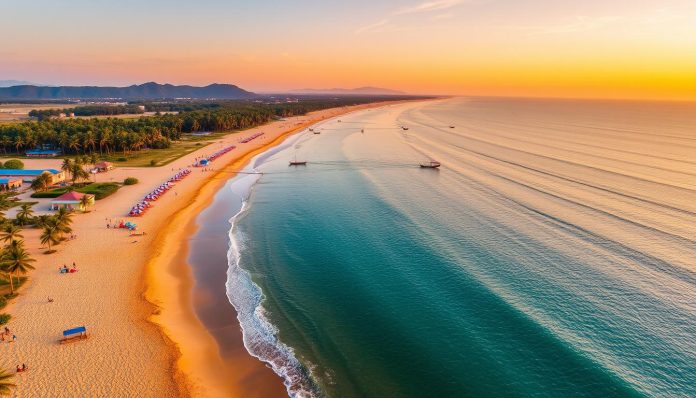
Barcelona's beach neighbourhood sits on a triangular peninsula between the port and the sea. The beach (around 4.5km of coastline) is excellent by European urban standards — wide, sandy, serviced, and warm from June through October. Barceloneta village has retained some authentic fishermen's-quarter character: the narrow grid of streets is lined with seafood restaurants, local bakeries, and old men playing cards. Walk along the Passeig Marítim toward the Port Olímpic and the striking Frank Gehry golden fish sculpture (a leftover from the 1992 Olympics) for the full waterfront experience.
Gràcia
The bohemian heart of Barcelona, Gràcia was an independent municipality until 1897 and still feels like a village within the city. Its plazas — Plaça del Sol, Plaça de la Vila de Gràcia, Plaça de la Virreina — are filled with locals at all hours rather than tourists. The narrow streets pack in independent cafés, natural wine bars, and street art. Every August, the famous Festa Major de Gràcia transforms the neighbourhood streets into elaborately decorated themed corridors built entirely by local residents — one of the most remarkable urban festivals in Europe. This is where you come to eat and drink like a local, away from the tourist premium of the Old City.
Food and Drink: Eating Like a Barcelonino
Barcelona's food culture is one of the richest in Europe, drawing on centuries of Catalan culinary tradition, an extraordinary seafood heritage, and a world-class restaurant scene that has produced multiple Michelin-starred establishments and repeatedly appeared at the top of global best-restaurant rankings. But the soul of Barcelona's food life is found not in fine dining rooms but in neighbourhood tapas bars, market stalls, and beachside chiringuitos.
Pa amb tomàquet (bread with tomato) is the foundation of Catalan cuisine — bread rubbed with ripe tomato, drizzled with olive oil, and finished with coarse salt. It accompanies almost every meal and costs almost nothing. Patatas bravas — fried potatoes with spicy tomato sauce or aioli — are the universal tapas bar staple; the version at Bar Tomás in the upscale Sarrià neighbourhood is legendary, drawing pilgrims from across the city. Croquetes de bacallà (salt cod croquettes) are found everywhere and vary dramatically in quality: at their best, they are creamy, yielding, and faintly oceanic, with a paper-thin golden crust.
For seafood, Barceloneta is the destination: gambas al ajillo (prawns sizzling in garlic oil), cloïsses (clams with white wine and parsley), pop a la gallega (Galician-style octopus with paprika and olive oil), and of course paella. Genuine paella in Barcelona requires a reservation, patience, and willingness to pay properly — it is a lunch dish served around 2pm, takes 20 minutes to cook to order, and costs €20–€35 per person for the real thing. Avoid any paella advertised at €8 on a laminated menu outside a tourist restaurant on La Rambla: it will be pre-made rice reheated in a pan.
The vermut culture is quintessentially Barcelonino. A pre-lunch aperitivo of vermouth served over ice with a twist of orange peel, alongside a small plate of olives and anchovies, is consumed at around noon at neighbourhood bars. Sunday vermut in Gràcia or Poble Sec is one of the great pleasures of city life here. For pintxos (Basque-style bar snacks on bread), the streets around Carrer del Parlament in Sant Antoni offer excellent options.
For fine dining, Barcelona punches above its weight. Disfrutar (ranked #2 in the World's 50 Best Restaurants in 2024) offers an extraordinary multi-course tasting menu for around €270 per person, requiring booking months in advance. More accessible but still exceptional: Cervecería Catalana on Carrer de Mallorca for consistently great tapas, Bodega Sepúlveda for natural wine and razor clams, and Bar Calders in Sant Antoni for the perfect lazy afternoon beer and pintxo.
| Meal / Drink | Budget | Mid-Range | Splurge |
|---|---|---|---|
| Breakfast (coffee + pastry) | €2–€3 | €5–€8 | €10–€15 |
| Lunch (menú del día) | €12–€15 | €20–€30 | €40–€80 |
| Tapas dinner per person | €15–€20 | €30–€45 | €60–€120 |
| Glass of house wine | €3–€4 | €6–€10 | €12+ |
| Craft beer (local) | €3–€4 | €5–€7 | — |
| Vermut at a local bar | €3–€5 | €6–€8 | — |
La Boqueria and Barcelona's Markets
La Boqueria — officially the Mercat de Sant Josep de la Boqueria — is one of the most famous food markets in the world, and its location on La Rambla makes it a near-mandatory first stop. The reality in 2026 is complex: the market has struggled with over-tourism, with some of the city's best vendors having relocated due to soaring rents driven by tourist footfall. Many stalls near the entrance are now aimed squarely at visitors — overpriced fruit cups and pre-sliced jamón rather than the wholesale produce the market was built on.
That said, La Boqueria remains genuinely spectacular if you know where to look. Go early (before 9:30am), walk past the tourist stalls at the entrance, and head to the back third of the market where professional vendors and local shoppers still congregate. The seafood counters — piled high with sea urchins, live lobsters, razor clams, and gleaming fish delivered that morning — are extraordinary. The mushroom stalls in autumn offer dozens of wild varieties you won't find outside Catalonia.
For a more authentic experience, locals recommend Mercat de Santa Caterina in El Born, designed by the late Enric Miralles with a spectacular undulating ceramic mosaic roof visible from the air. Less touristy, excellent quality, genuinely used by neighbourhood residents for daily shopping. Mercat de l'Abaceria in Gràcia is a lovely 19th-century iron market hall with a strong food and vintage scene. Mercat de Sarrià, tucked into the upscale village neighbourhood above the city, is the most peaceful and perhaps the most authentic of all.
Art and Culture Beyond Gaudí
Barcelona's cultural scene extends far beyond its architectural landmarks. The city is anchored by several world-class museums, a thriving contemporary arts infrastructure, and a performing arts scene that benefits from the extraordinary Palau de la Música Catalana.
The Museu Picasso in El Born occupies five connected medieval palaces and houses an extraordinary collection focused on Picasso's formative years in Barcelona. The early works — academic paintings completed as a teenager — are remarkable evidence of his technical mastery before he chose to dismantle it. The series of 58 reinterpretations of Velázquez's Las Meninas in the final gallery is genuinely breathtaking, a conversation across three centuries between two giants of Spanish painting. Tickets cost €14; book ahead. Free on the first Sunday of every month (queues are substantial).
The Fundació Joan Miró on Montjuïc was designed by Josep Lluís Sert and opened in 1975 as the definitive showcase for the Catalan surrealist's work. The building itself — Mediterranean light pouring through white walls and courtyards — is as important as the art it contains. Miró's bold primary colours and biomorphic forms are joyful, accessible, and deeply connected to the Catalan landscape. Admission is €14. Combine with a visit to the nearby Museu Nacional d'Art de Catalunya (MNAC), whose Romanesque art collection — removed from rural Pyrenean churches for safekeeping in the early 20th century — is the finest in the world.
For contemporary art, the Museu d'Art Contemporani de Barcelona (MACBA) in El Raval is housed in a stark Richard Meier building and focuses on art from the 1950s to the present. The plaza in front — Plaça dels Àngels — is one of Europe's premier skateboarding spots, and the contrast between skaters' kinetic energy and the museum's white minimalism is one of Barcelona's great accidental spectacles.
The Palau de la Música Catalana, designed by Lluís Domènech i Montaner between 1905 and 1908, is arguably the most beautiful concert hall in the world. A Modernista explosion of stained glass, mosaics, and sculpted stone, its centrepiece is an inverted stained-glass dome that floods the auditorium with colour. Attending a concert here — anything from baroque chamber music to flamenco — is an experience that transcends the music itself. Tickets from €30; daytime guided tours (€22) are available when no performance is scheduled.
Beaches, Mountains, and the Great Outdoors
Barcelona's geography is exceptional: a Mediterranean city backed by the Collserola mountains and bordered by sea. This gives visitors easy access to both beach and mountain within the city limits, and easy day trips to world-class natural scenery within an hour's drive.
The main city beaches — Barceloneta, Bogatell, Mar Bella, Nova Icària, and Llarga — are clean, well-serviced, and free. The water reaches 24–26°C at peak summer and remains swimmable through October. Mar Bella is more relaxed and popular with locals and the naturist community; Barceloneta is most accessible but most crowded. Stand-up paddleboarding and kayak rentals are available along the coast (€15–€25/hour), and there are several beachside chiringuitos serving mojitos and fresh seafood from midday.
For a quick mountain escape, the Parc de Collserola begins where the city essentially ends — 8,000 hectares of Mediterranean forest with excellent hiking and trail running. The Bunkers del Carmel — ruined anti-aircraft batteries from the Spanish Civil War on a hilltop north of Gràcia — offer possibly the best 360° panorama of the city, and have become a beloved local gathering point for sunset picnics. Completely free, reached by a 20-minute walk from the Carmel neighbourhood. Visit on a clear winter morning and you may be able to see the Pyrenees and Mallorca simultaneously.
Day Trips from Barcelona
Barcelona's position in Catalonia puts it within easy reach of some extraordinary destinations that make excellent day or overnight trips, each with a completely different character from the city itself.
Montserrat (1 hour by train and rack railway, approximately €25 return all-in) is the dramatic mountain monastery that served as Catalonia's spiritual heart for over a thousand years. The serrated peaks — montserrat means 'jagged mountain' in Catalan — rise abruptly from the plain in columns of bulbous conglomerate rock, creating a landscape that inspired Wagner when he composed Parsifal. The Benedictine monastery houses the revered Black Madonna (La Moreneta), and the Escolania boys' choir — one of the oldest in Europe, singing continuously since the 13th century — performs daily at 1pm and 6:45pm. Take the Sant Joan trail from the upper funicular station for the best views.
Sitges (35 minutes by train, €4.50 each way) is a charming whitewashed coastal town south of Barcelona, famous for its beaches, its celebrated Carnival, and its long-standing LGBTQ+-friendly culture. The historic old town with its seafront promenade, baroque church perched on a rocky promontory, and terraced restaurants is lovely for a relaxed afternoon. The beaches here are wider and less crowded than Barcelona's, with clearer water.
Tarragona (1 hour 20 minutes, €7.50) was the capital of Roman Hispania and retains an extraordinary collection of monuments: a first-century amphitheatre overlooking the sea, a perfectly preserved aqueduct, forum ruins, and a 2nd-century circus that once seated 30,000 spectators. It is one of the best-preserved Roman cities in western Europe, yet receives a fraction of the tourist attention of Rome. Combine with the medieval Jewish quarter and excellent seafood in the Serrallo fishing district.
The Penedès wine region (45 minutes to Vilafranca del Penedès, €5) produces Catalonia's excellent cava sparkling wine and increasingly acclaimed still wines from native varieties like Xarel-lo and Garnatxa. Several wineries offer tastings and cellar tours; Torres, Freixenet, and the cooperative celler at Sant Sadurní d'Anoia are particularly good options. Most tastings cost €10–€20 and can be arranged in advance online.
Getting There, Getting Around, and When to Go
Barcelona is served by El Prat Airport (BCN), around 12km southwest of the city centre. The Aerobus express coach (€7.75 one way, €13.30 return) runs every 5 minutes to Plaça de Catalunya and is the quickest and most convenient option, taking around 35 minutes. The metro (L9 Sud line, €5.90) requires a change at Torrassa but is cheaper. Taxis cost €35–€45 depending on traffic and time of day; Uber and Cabify operate legally here too.
Within the city, the metro is excellent — clean, frequent, and covering all major areas. A single fare costs €2.55; the T-Casual 10-trip card costs €12.15 and can be shared between travellers on separate journeys. The metro runs until 2am on weekdays, 3am on Saturdays, and 24 hours on Friday and Saturday nights. Many visitors find that the city's compact, walkable layout means they need the metro less than expected — the Gothic Quarter to Barceloneta is a 20-minute walk; El Born to Eixample takes 25 minutes on foot.
Barcelona is highly cycle-friendly. Visitor-oriented rental shops charge €10–€20 per day, and dedicated lanes cover most major routes. Electric scooter rentals (Tier, Lime) are available on street corners throughout the city for €0.25 per minute.
The best times to visit are May–June and September–October. Shoulder seasons offer warm weather (22–27°C), manageable crowds, and the full range of restaurant and activity options. July and August are peak summer: very hot (30–35°C), extremely crowded, and with accommodation prices 40–60% higher. December through February is mild (10–15°C), very quiet, and excellent for sightseeing without queues — beach weather is obviously out, but hotel rates drop by 50% and the city feels genuinely local again.
Barcelona Budget Breakdown 2026
| Category | Budget (€/day) | Mid-Range (€/day) | Comfortable (€/day) |
|---|---|---|---|
| Accommodation | €25–€40 (hostel dorm) | €80–€130 (mid hotel) | €180–€350 (boutique) |
| Food & drink | €20–€30 | €45–€70 | €90–€150 |
| Transport | €5–€8 | €8–€15 | €15–€30 |
| Attractions | €15–€25 | €30–€50 | €60–€100 |
| Total per day | €65–€103 | €163–€265 | €345–€630 |
Barcelona is considerably more affordable than London or Paris but broadly comparable to Amsterdam or Rome. The single biggest saving is the menú del día — the fixed lunch menu (starter, main, dessert, bread, and a glass of house wine) available at most neighbourhood restaurants for €12–€16. This is how Barceloninos eat, and it represents extraordinary value: a two-course meal with wine at a genuinely good restaurant for the price of a sandwich and coffee at a London station.
Quick Tips for Visiting Barcelona in 2026
- Book Sagrada Família and Casa Batlló months in advance — walk-up tickets are rarely available in peak season, and online booking is cheaper than at-the-door pricing.
- Eat your big meal at lunch, not dinner — the menú del día makes Barcelona's best restaurants accessible at a fraction of their evening prices. Order the fixed menu, not à la carte.
- Carry a small crossbody bag and keep it in front of you — Barcelona has a persistent pickpocket problem on La Rambla, in the metro, and at major attractions. Don't use a backpack in tourist areas.
- Learn a few words of Catalan — Gràcies (thank you), Bon dia (good morning), Per favor (please). Locals notice the effort and it opens doors. Catalan is different from Spanish and speaking it is seen as a mark of respect.
- Do not eat on La Rambla — the boulevard is beautiful for a stroll but the restaurants lining it are universally overpriced and mediocre. Walk one block in either direction to find genuinely good local spots.
- Visit the Bunkers del Carmel at sunset — skip the expensive rooftop bars and join the locals at this free Civil War hilltop viewpoint for the best panorama in the city. Bring a picnic.
- Try the vermut ritual — vermouth with olives and anchovies at around noon is one of Barcelona's quintessential pleasures and costs €3–€5 at a neighbourhood bar. This is how Sunday starts here.
- The Barcelona Card (€45–€65 for 3–5 days) includes unlimited public transport and discounts at over 25 museums and attractions — worth calculating whether it makes sense for your specific itinerary.
- Sunday morning is the best time for the Gothic Quarter — the streets are quiet, the light is beautiful, the bakeries are open, and the local residents fill the cafés rather than tour groups.
- Take the night bus home — Barcelona's Nitbus network covers the city for the standard €2.55 metro fare. Taxi and ride-share prices surge dramatically after midnight on weekends; the bus is cheaper and often faster.
- Check the free museum days — the first Sunday of the month is free at Museu Picasso, MACBA, MNAC, and several others. Museums are also free on April 23 (Sant Jordi, Catalonia's cultural day) and September 11 (La Diada).


Comments