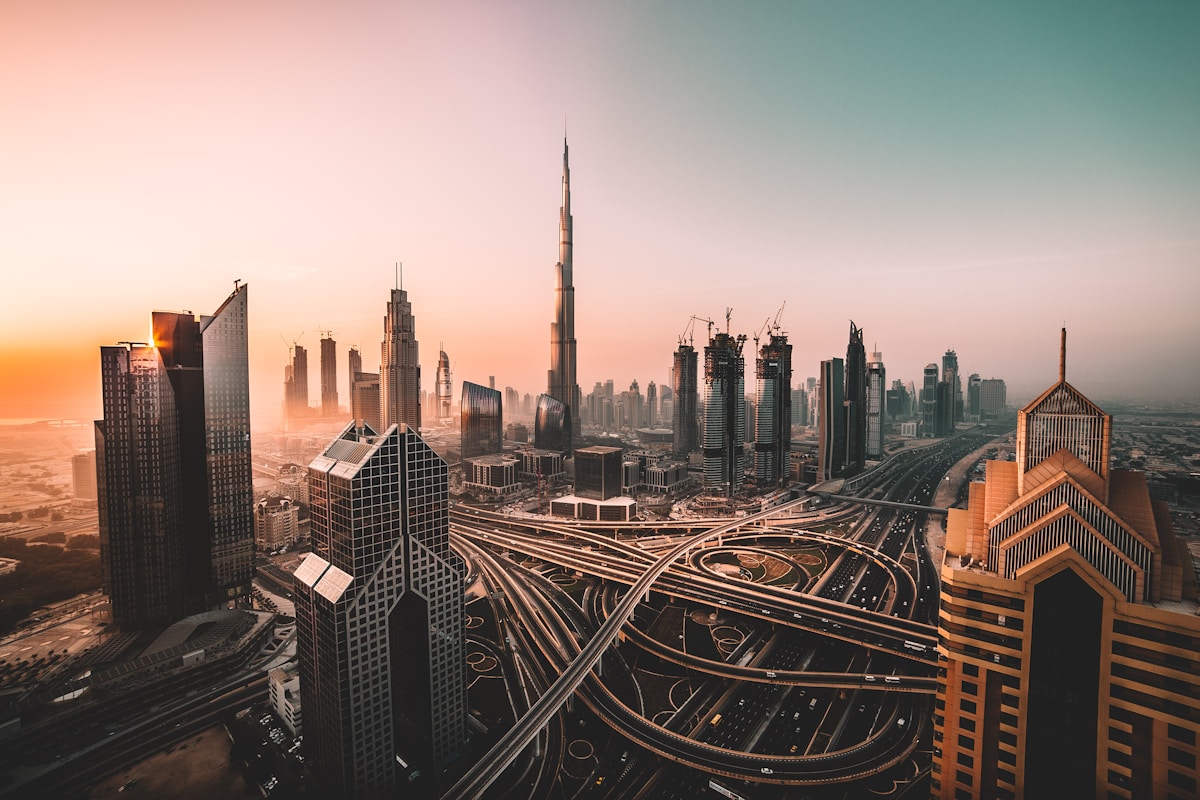
Dubai is arguably the most audacious city on earth — a place that has compressed two centuries of urban development into five decades, conjuring skyscrapers, artificial islands, and indoor ski slopes from desert sand. It is simultaneously the world's tallest building, a souk that has been trading spices since the 1800s, the most visited city in the Middle East, and a genuine crossroads of global cultures where over 200 nationalities live and work side by side. To dismiss Dubai as shallow or manufactured is to misunderstand it entirely.
This guide is for travelers who want more than a mall and a brunch buffet. Dubai rewards curiosity — the historic creek district of Al Fahidi is a revelation, the food scene spans every cuisine on earth at prices from budget to stratospheric, and the desert an hour from the city center is one of the most dramatic landscapes you'll encounter anywhere. Here's how to experience Dubai the right way.
When to Visit Dubai
Dubai's climate is the single biggest factor in planning your trip. The city sits at approximately 25°N latitude and has a desert climate: brutal, often dangerous heat from June through September (temperatures regularly exceed 45°C/113°F with high humidity near the coast), and glorious, mild winters from November through March.
The ideal window is November to March. Temperatures sit between 18°C and 28°C (64–82°F) during the day, dropping to pleasant evenings in the mid-teens. These months see the highest tourist volumes and room rates, but the outdoor experience — desert safaris, beach days, rooftop bars, the annual Dubai Shopping Festival in January — is superb. December particularly has a festive energy, with elaborate lighting installations across Downtown Dubai.
April and October are shoulder months with rising or falling heat — perfectly manageable (28–35°C) but with some sweaty afternoons. These months offer meaningfully lower hotel rates, particularly October before the main season begins. May is the last viable month before the summer heat intensifies.
Summer (June–September) is not recommended for general tourism. The heat and humidity make outdoor activity genuinely dangerous, and the city largely operates underground — in malls, hotels, and air-conditioned everything. That said, summer is when Dubai runs its most aggressive promotions: hotel rates can drop 50–70%, and if your itinerary is purely indoor (malls, museums, indoor theme parks), you can visit very cheaply. Ramadan — which shifts annually — brings a different, quieter, deeply cultural atmosphere that some travelers find enriching.
Getting to Dubai
Dubai International Airport (DXB) is consistently one of the world's busiest airports and Emirates airline's flagship hub. It has exceptional connectivity to every continent — direct routes to over 230 destinations mean Dubai is genuinely accessible from almost anywhere. Terminal 3 (Emirates) is one of the finest airport terminals in the world: vast, well-organized, and stocked with genuinely good food and retail. Terminal 1 handles other major airlines.
The newer Al Maktoum International Airport (DWC), about 40km from Downtown, handles some budget carriers and is set to eventually become the world's largest airport when fully built. Currently it's more inconvenient for most travelers — budget the extra ground transport time if flying in there.
The Dubai Metro's Red Line has a direct connection to Dubai International (Union/BurJuman for interchange) — the journey to Downtown Dubai or the Burj Khalifa area takes about 30 minutes and costs around AED 8. Taxis are abundant and metered, with a flag fall of AED 12; journey to Downtown from DXB runs AED 50–80 depending on traffic. Uber works normally and is often comparable in price to taxis.
Getting Around Dubai
Dubai is a sprawling, elongated city built along a single main artery — Sheikh Zayed Road — stretching roughly 60km from Deira in the north to the new developments around Expo City in the south. The city was designed for cars and the Metro, though expanding, doesn't cover everything.
The Dubai Metro (Red and Green lines) is clean, air-conditioned, cheap, and punctual. A Nol card (reloadable transit card, AED 6 deposit) gives you access to Metro, buses, trams, and the water taxi. The Red Line covers the main tourist corridor: Dubai Mall/Burj Khalifa, Sheikh Zayed Road, Mall of the Emirates, Marina. It's excellent for this spine but doesn't reach Deira, Bur Dubai, or Jumeirah Beach without bus connections.
The Dubai Tram runs along the Marina waterfront — useful for getting between Marina Mall, JBR beach, and the monorail to Palm Jumeirah. Abra water taxis (traditional wooden boats) cross Dubai Creek between Deira and Bur Dubai for AED 1 — one of the best value experiences in the city, crossing a waterway that has been actively trading for over 150 years.
Taxis are abundant, metered, and reasonably priced by global standards. RTA taxis (cream-colored) are reliable. Careem (the regional Uber) is widely used and often preferable. Many hotels will organize private transfers — compare these against Careem prices before accepting, as the premium can be significant.
Dubai's Neighborhoods: Where to Spend Your Time
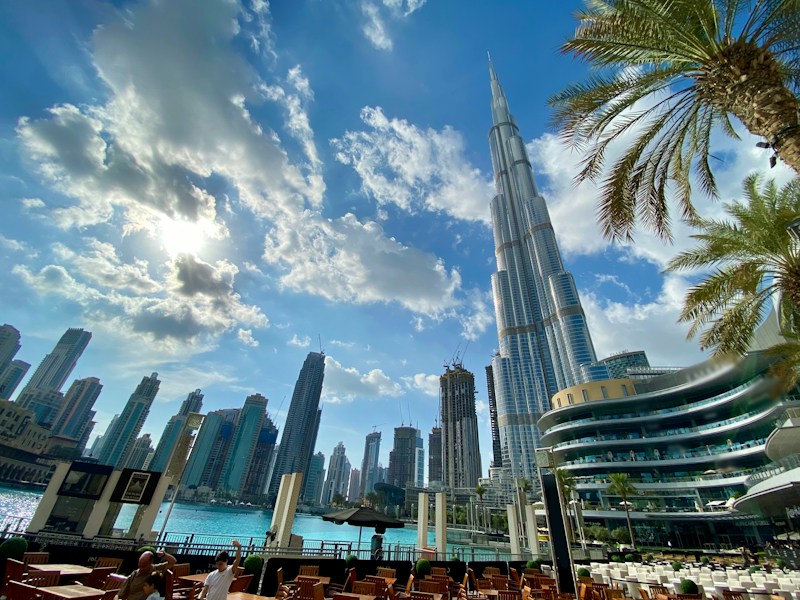
Downtown Dubai is the beating heart of modern Dubai — the Burj Khalifa, Dubai Mall, the Dubai Fountain, and Burj Lake are all here. It is undeniably impressive, particularly at night when the fountain show (free, runs every 30 minutes from 6pm) plays against the world's tallest building. But Downtown is more spectacle than neighborhood — there's relatively little organic street life. Come for the big-ticket experiences, then base yourself elsewhere.
Al Fahidi Historical Neighbourhood (Old Dubai) is the corrective to Downtown's excess. A preserved quarter of coral-and-gypsum wind-tower houses dating to the late 19th century, Al Fahidi is now home to galleries, the excellent Coffee Museum, the Sheikh Mohammed Centre for Cultural Understanding, and the Dubai Museum. The narrow lanes and courtyard architecture give a genuine sense of what the city looked like before oil wealth arrived. This is essential Dubai for any culturally curious traveler.
Deira & the Souks across the creek from Al Fahidi retain a working commercial intensity that has barely changed in generations. The Gold Souk (Dubai has more gold jewelry shops per square meter than almost anywhere on earth — prices are competitive and quality is regulated), the Spice Souk (walls of saffron, dried limes, frankincense, and turmeric), and the covered textile souks are all within walking distance. Come in the late afternoon and stay for the abra crossing at dusk.
Dubai Marina & JBR (Jumeirah Beach Residence) is the city's outdoor living room — a purpose-built canal district with a 7km waterfront promenade, excellent beach access, and the pedestrian-friendly The Walk and The Beach retail strips. The architecture is uniformly modern tower blocks, but the energy is lively and genuinely mixed in nationality. This is where Dubai residents exercise, eat brunch, and socialize — not just tourists.
Palm Jumeirah is the iconic artificial palm-shaped island visible from space. It's worth visiting to understand the scale of Dubai's ambition, and the Atlantis resort at the top of the palm is a spectacle unto itself. The boardwalk at the base of the palm spine has good restaurants with views of the Marina skyline. Take the monorail from the tram at Knowledge Village.
"Dubai is the place where the future arrives before anywhere else — not always gracefully, sometimes controversially, but always at a scale that leaves you re-calibrating your sense of what's possible."
Top Attractions & Experiences
Burj Khalifa — At 828 meters, the world's tallest building is still genuinely thrilling to stand beneath and extraordinary to look out from. The "At the Top" observation deck on floors 124 and 125 (AED 149–169) gives views over the entire city to the desert and Gulf. The "SKY" experience on floor 148 (AED 379+) is quieter and even more vertiginous. Pre-book online — walk-up tickets are expensive and often unavailable in peak season. The best time for the view is golden hour before sunset.
Dubai Frame — A 150-meter picture frame straddling old and new Dubai, with a glass-floored sky bridge connecting the two towers. One side frames the old city of Deira and Bur Dubai; the other frames the modern Downtown skyline — a clever architectural concept that doubles as a genuinely interesting museum about Dubai's history. AED 50. Often overlooked but excellent value.
Dubai Creek Harbour & the Creek Museum — A fascinating newer development around the historic Al Seef district — sympathetically designed waterfront buildings housing cafés, boutiques, and cultural spaces alongside the restored dhow wharves where wooden boats still load cargo for trade routes across the Gulf, East Africa, and South Asia. Come at night when it's beautifully lit.
Desert Safari — No Dubai visit is complete without a sunset desert excursion into the Hajar foothills and the red dunes of the Dubai Desert Conservation Reserve. Standard 4WD dune-bashing tours cost AED 200–350 and include camel rides, sandboarding, a Bedouin camp dinner, and shisha. For a more refined experience, the Al Maha Desert Resort offers private butler-service villas in the conservation reserve with guided wildlife walks to see arabian oryx. The overnight desert experience — sleeping under a billion stars — is one of the world's genuinely extraordinary travel moments.
Dubai Opera — The dhow-shaped performing arts venue at the foot of the Burj Khalifa has established itself as one of the region's finest stages. It programs everything from world-class opera and ballet to Broadway shows and concerts. Even attending just for pre-show drinks on the terrace with the fountains and Burj reflected in the lake is worthwhile.
Food & Dining in Dubai
Dubai's food scene is one of the most diverse and dynamic in the world, which makes sense for a city where 92% of the population is expat. You can eat extraordinarily well across virtually every cuisine, and the competition keeps quality remarkably high across the spectrum.
Emirati cuisine is the local tradition and genuinely worth seeking out, though it requires intent to find. Al Fanar restaurant in Festival City and Arabian Tea House in Al Fahidi both serve authentic dishes like machboos (spiced rice with meat or fish), harees (wheat and meat porridge), luqaimat (sweet fried dumplings with date syrup), and thick Emirati coffee (qahwa) flavored with cardamom and saffron. These flavors are deeply influenced by Persian, Indian, and East African trading history.
South Asian food dominates the budget and mid-range eating landscape. The area around Meena Bazaar in Bur Dubai has some of the finest Indian food outside the subcontinent — Gujarat thali houses, Hyderabadi biryani spots, and Kerala seafood restaurants serving the enormous Indian expat community. A full lunch here costs AED 20–30. This is where Dubai residents actually eat.
Lebanese cuisine is ubiquitous and excellent — shawarma, mezze, grilled meats, freshly baked bread. Automatic Restaurant (multiple locations) and Zaatar w Zeit are local chains that serve the city around the clock. The Ravi Restaurant in Satwa is a legendary Pakistani cafeteria that's been feeding Dubai since 1978 — a full meal costs under AED 40 and the chaotic, friendly atmosphere is a Dubai institution.
Brunch culture is a defining Dubai social institution. Friday and Saturday brunches (Dubai's weekend) at hotels across the city offer multi-hour unlimited food and beverage experiences ranging from AED 200 to AED 700+ per person. The most famous are at Atlantis The Palm, Address Downtown, and Jumeirah Al Qasr. For a more local take, the Souk Al Bahar restaurants offer good brunch value with Burj views.
For fine dining, Dubai has attracted branches of essentially every major global restaurant brand — Nobu, Zuma, Cipriani, La Petite Maison, Coya — alongside homegrown excellence like 3fils (casual Japanese in Jumeirah Fishing Harbour), Trèsind Studio (modern Indian tasting menu, World's 50 Best), and Boca (sustainable Mediterranean).
Where to Stay in Dubai
Dubai has the highest density of luxury hotels of any city in the world, and meaningful competition between them keeps standards genuinely high. Understanding which area suits your priorities is key.
Downtown Dubai offers the best access to the Burj Khalifa, Dubai Mall, and the fountain — ideal for first-timers. The Address Boulevard and Vida Downtown are stylish options at the mid-luxury tier. The Armani Hotel Dubai inside the Burj Khalifa itself is unique if price is no object.
Dubai Marina has excellent options at slightly lower rates than Downtown, with better access to the beach and a more residential, walkable vibe. Marriott Harbour Hotel & Suites and InterContinental Dubai Marina offer solid mid-luxury choices. Serviced apartments are excellent value here for longer stays.
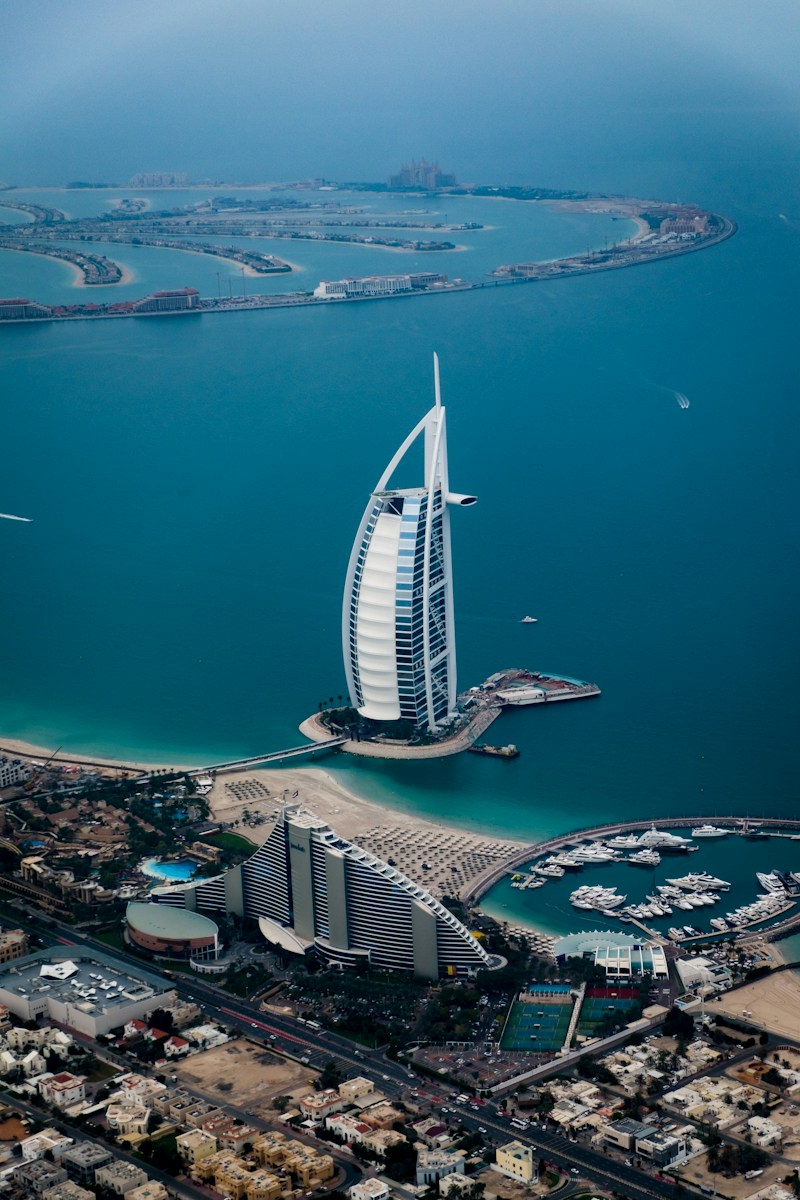
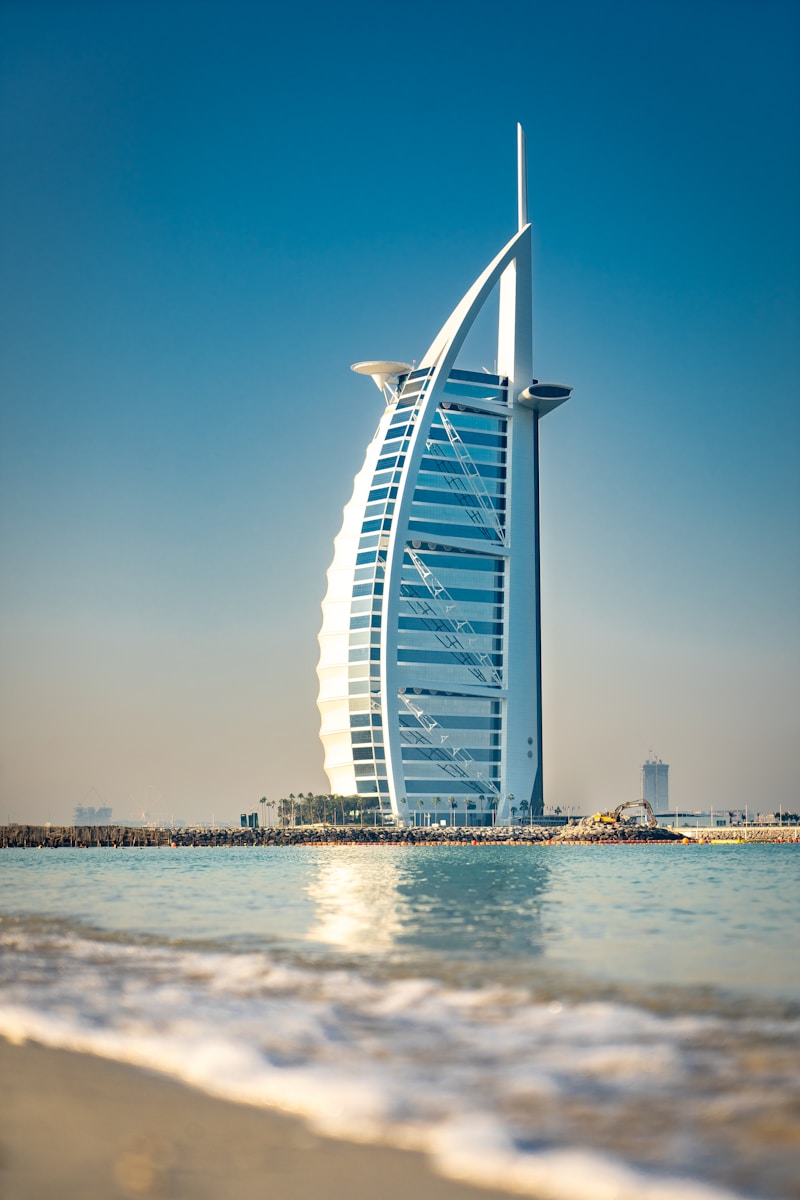
Jumeirah & the Palm are home to Dubai's most iconic hotel experiences: the Burj Al Arab (the sail-shaped building on its own island — the world's most recognizable hotel, though afternoon tea at AED 700+ per person before you can enter is a commitment), the Jumeirah Beach Hotel, and on Palm Jumeirah, the spectacular Atlantis The Palm and the newer, quieter Atlantis The Royal for ultra-premium guests.
Budget travelers should look at Rove Hotels — a Dubai-grown brand with smart, design-led rooms at AED 250–400/night in central locations including Downtown and Healthcare City. For the most budget-friendly options, neighborhoods like Bur Dubai and Al Barsha have international chain properties (Premier Inn, ibis, Citymax) at AED 150–250/night with good Métro access.
Shopping in Dubai
Shopping is a legitimate cultural activity in Dubai, not just retail therapy. The Dubai Mall — at 5.9 million square feet, the world's largest by total area — contains an Olympic-sized ice rink, an aquarium with whale sharks, a 150-meter indoor waterfall, and over 1,200 shops alongside perhaps the finest food court in any mall on earth. Budget at least half a day just for the non-retail experiences.
The Gold Souk in Deira sells jewelry at rates that routinely undercut Western retail by 30–50% — prices are set by the daily gold rate (displayed at the entrance) plus a making charge, and you can haggle on the latter. Bring a jeweler's loupe if you're serious. The Spice Souk next door sells everything from Iranian saffron to Omani frankincense at genuinely competitive prices — a bag of premium saffron that would cost €40 in Europe goes for AED 30–50 here.
The Dubai Design District (d3) and Alserkal Avenue in Al Quoz are the city's creative industry clusters, with contemporary art galleries, independent fashion boutiques, and designer studios that offer a very different retail experience from the mega-malls. Alserkal in particular has a thriving weekend market and gallery openings that attract Dubai's creative class.
Day Trips & Escapes from Dubai
Abu Dhabi (90 minutes by road) is the UAE's capital and cultural center — the Louvre Abu Dhabi (a branch of the Paris institution, architecturally stunning) and the Sheikh Zayed Grand Mosque (one of the world's most beautiful mosques, with capacity for 40,000 worshippers) are alone worth the day trip. Many visitors base themselves in Dubai for logistical convenience and day-trip to Abu Dhabi for culture.
Al Ain (2 hours from Dubai) is the UAE's oasis city and a UNESCO World Heritage site — a completely different face of the Emirates, with ancient falaj irrigation channels, camel markets, ancient hill forts, and the dramatic Jebel Hafeet mountain. Rent a car for this one.
Hatta (1.5 hours, accessible by Dubai public buses) is a mountain enclave in the Hajar range where Dubai residents escape the heat. The Hatta Dam reservoir is strikingly turquoise, kayaking and mountain biking are popular, and the Hatta Honey Bee Discovery Centre is a surprisingly engaging attraction. Overnight in the Hatta Damani Lodges for a tented glamping experience with mountain views.
Musandam Peninsula, Oman (3 hours) is a series of dramatic fjord-like khors (inlets) accessible by dhow cruise — one of the most spectacular landscapes in the Arabian Peninsula. A day trip from Dubai including boat charter costs around AED 500–800 and is genuinely bucket-list worthy. Note you'll cross an international border, so bring your passport.
Practical Tips for Dubai
Dress code: Dubai is more liberal than many Gulf destinations, but modesty is expected in public spaces (souks, government buildings, malls). Swimwear stays at the beach or pool. Shoulders and knees covered is the practical rule for sightseeing. In clubs and rooftop bars, Dubai's dress code is actually more strict than many Western cities — smart casual minimum at most premium venues.
Currency: The UAE Dirham (AED) is pegged to the USD at roughly 3.67 AED per dollar — a rate that's been fixed since 1997. Euros and dollars are widely accepted at tourist attractions and malls. ATMs are everywhere and work on all major networks. Contactless payment is universally accepted.
Safety: Dubai is one of the safest cities in the world for international travelers. Crime against tourists is rare. The main considerations are cultural respect (avoid public displays of affection, dress modestly in traditional areas, respect Ramadan fasting hours) and road safety — Dubai has high traffic speeds on its major roads and pedestrian crossings can be intimidating.
Connectivity: Dubai has outstanding 5G coverage and free WiFi is available in the Metro, malls, and most hotels. VoIP calls (WhatsApp calls, FaceTime audio/video) are officially restricted in the UAE and may not work on local SIM cards, though this is inconsistently enforced. A local SIM from Etisalat or du at the airport (AED 100–150 for a tourist data package) is highly recommended.
"Dubai makes the impossible routine. Whether that's a ski slope in a desert shopping mall, the world's tallest building rising above ancient trading dhows, or a single city where 200 nationalities coexist without friction — it forces you to reconsider what a city can be."
Budget Breakdown for Dubai
Dubai has a reputation for expense that is only partially deserved. The luxury end is genuinely world-class and priced accordingly. But the city also has extraordinary budget dining (particularly in the Indian and Pakistani neighborhoods), a very cheap Metro system, and free beaches. The trap is over-indexing on hotel and brunch prices.
Budget (AED 400–600/day / ~$110–165): Rove or ibis hotel AED 250–350, Metro transport AED 20–30, lunch at Bur Dubai restaurant AED 25–40, dinner at a mid-range restaurant AED 80–120, one paid attraction AED 50–100. Easily achievable.
Mid-range (AED 1,000–1,800/day / ~$270–490): 4-star hotel AED 600–900, mixed dining including one nice restaurant dinner AED 200–300, taxis AED 80–120, attractions AED 150–250. This is comfortable and covers the key experiences.
Luxury (AED 3,000+/day / $800+): Palace hotel from AED 2,000+, Michelin-level dining, private transfers, premium experiences like helicopter tours (AED 750 for 12 minutes) or desert glamping. Dubai performs brilliantly at this level — value for money in pure experience terms is very high.
Safety & Legal Considerations
Dubai operates under UAE federal law which is substantially different from Western legal systems. Several behaviors that are unremarkable at home can result in serious legal consequences here. Carrying prescription medication requires documentation (bring doctor's letters and official packaging). Certain medications are controlled or banned entirely — check the UAE Ministry of Health website before travel. Recreational drugs carry severe penalties including imprisonment and deportation.
Photographing government buildings, military installations, and certain public infrastructure is restricted. Photographing individuals — particularly local women — without explicit consent is both culturally inappropriate and potentially a legal issue. Be particularly thoughtful about social media posts that could be interpreted as criticizing UAE government, law, or Islam.
These considerations are not meant to frighten — Dubai receives 17+ million tourists annually and the vast majority experience zero legal issues. But informed travel is better travel, and understanding the framework helps you navigate with confidence.
Dubai is a city that demands engagement on its own terms. Come expecting Las Vegas and you'll be partially right but mostly wrong. Come expecting Abu Dhabi (more conservative, more cultural) and you'll also be surprised. Dubai occupies a category entirely its own — a maximalist city that has channeled extraordinary wealth into extraordinary infrastructure, attracting a global population that has created something genuinely cosmopolitan in the desert. The historic creek district, the extraordinary food diversity, the desert experience an hour from the Burj Khalifa, and the sheer spectacle of the skyline at night make it one of the world's most compelling short-stay destinations. Go with an open mind and a degree of cultural humility, and it will exceed your expectations every time.
Best season: November–March | Minimum stay: 4 days | Don't miss: Al Fahidi at sunset, abra across the creek, a desert overnight, Trèsind Studio for dinner
Comments