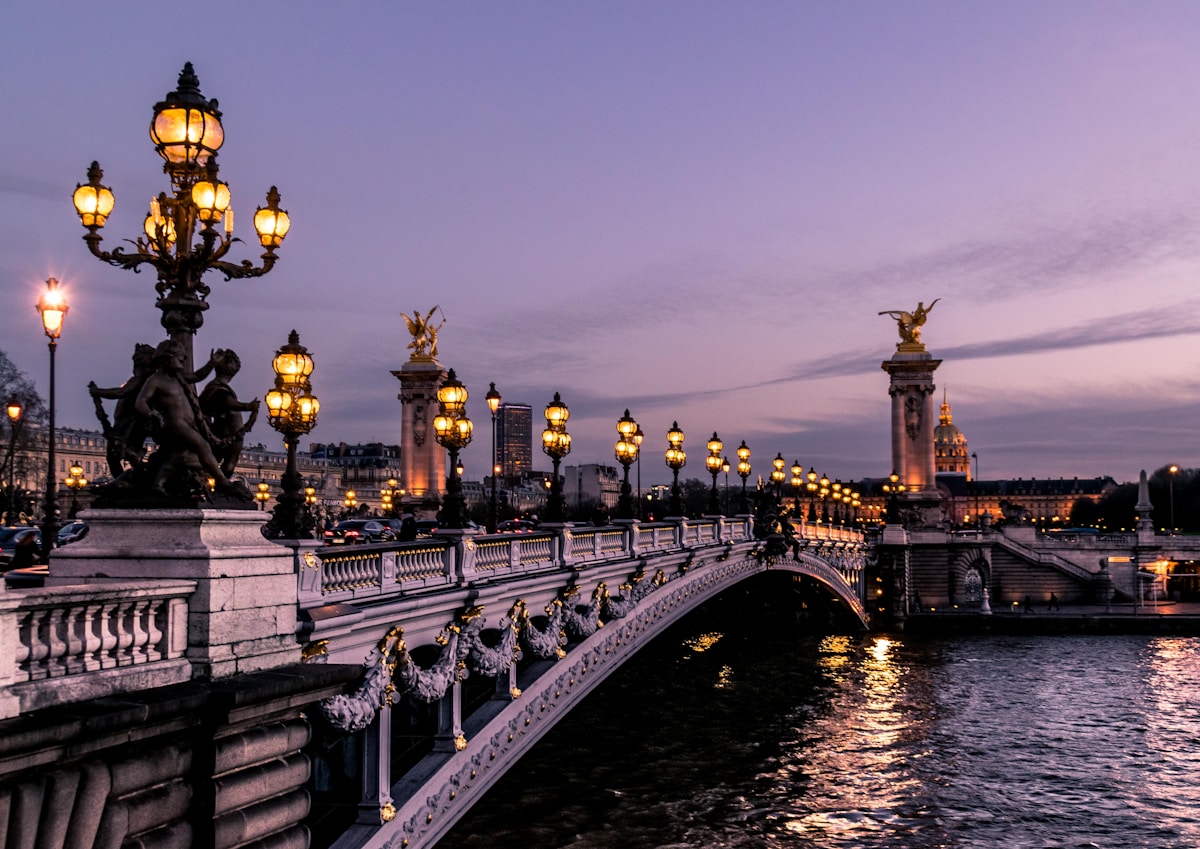
Paris. The name alone conjures images of candlelit bistros, the Eiffel Tower glittering at midnight, the smell of fresh croissants drifting from a boulangerie on a cobblestone street. It is a city that has been written about, painted, photographed, and dreamed about more than almost any other place on earth — and somehow, impossibly, it still exceeds expectations when you arrive. Whether you're stepping onto French soil for the first time or returning for your tenth visit, Paris has a way of revealing something new every time.
This guide is not about seeing Paris from a bus window or checking monuments off a list. It's about understanding the city the way its residents do — learning which neighborhoods to wander, which cafés deserve your loyalty, where to eat when you're tired of tourist menus, and how to sidestep the crowds to find the Paris that still feels like a secret. From the grandeur of the Louvre to the quiet magic of a Sunday morning in the Marais, we cover it all.
When to Visit Paris
Paris is a year-round destination, but the experience varies dramatically by season. The classic answer is spring — April through June — when the chestnut trees bloom along the boulevards, café terraces fill with Parisians soaking up the mild sun, and the city is at its most visually iconic. Temperatures hover between 12°C and 22°C (54°F–72°F), making walking the city genuinely pleasurable. This is also when the famous wisteria blooms at the Maison de Retraite Montmartre, a completely off-the-radar spot that locals guard fiercely.
Summer (July–August) brings long golden days and a festive atmosphere, particularly around Bastille Day on July 14th, when fireworks explode over the Eiffel Tower and the whole city feels electric. The downside: this is peak tourist season, prices spike, and many Parisians actually leave the city for their own vacations, meaning some beloved local spots close for August. Queues at major museums can stretch two hours or more.
Autumn — September to November — is increasingly considered the connoisseur's choice. The summer crowds have thinned, the light turns honeyed and cinematic, and the city's fashion and cultural calendar kicks into high gear with Paris Fashion Week in September and FIAC (the contemporary art fair) in October. The weather is crisp but rarely brutal, and hotel rates drop noticeably from their summer highs.
Winter in Paris is underrated. December glitters with Christmas markets and festive window displays at Le Bon Marché and Galeries Lafayette. January and February see the fewest tourists of the year, with museums practically empty — you can stand in front of the Mona Lisa without being jostled. Pack layers and expect some rain, but embrace the cozy side of Parisian life: long lunches, museum afternoons, and evenings in wine bars.
Getting to Paris
Paris is served by two main international airports. Charles de Gaulle (CDG), about 25km northeast of the city, is the main hub handling most long-haul flights. Orly (ORY), about 14km south, handles many European and domestic routes. Both are well-connected to central Paris, but the journey matters — budget 60–90 minutes door-to-door from CDG in rush hour traffic.
The RER B train from CDG is the fastest and cheapest option at around €11.80, taking about 35–40 minutes to Gare du Nord or Châtelet–Les Halles. From there you connect to the Métro. The Orlyval light rail links Orly to the RER B at Antony station. Taxis from CDG are fixed-rate: €52 to the Right Bank, €58 to the Left Bank. Uber and similar apps work well and are often cheaper than taxis. Avoid shuttle services unless you have a very early morning flight — they're slow and involve multiple stops.
If you're arriving from London, the Eurostar train through the Channel Tunnel pulls directly into Gare du Nord in central Paris in about 2 hours 15 minutes — a far superior experience to flying once you factor in airport time. Similarly, high-speed TGV trains connect Paris to Amsterdam, Brussels, Lyon, Marseille, and beyond, making the city an excellent base for broader European exploration.
Getting Around the City
The Paris Métro is one of the world's great urban transit systems — 16 lines, 302 stations, and almost nowhere in the city more than a 10-minute walk from a stop. It runs from 5:30am until around 1:15am on weekdays (2:15am on weekends). For most sightseeing, the Métro is your primary tool. Learn to read the direction signs by the name of the terminus station rather than compass direction, and you'll navigate it intuitively within a day.
But Paris is also one of the world's great walking cities, and many of the best experiences happen between Métro stops. The distance from the Louvre to Notre-Dame is a 25-minute walk along the Seine — arguably one of the most beautiful urban strolls on earth. From Montmartre down through the 9th arrondissement to the grands boulevards takes under an hour and reveals three entirely different faces of the city.
Vélib', Paris's bike-share system, has over 20,000 bikes at 1,400 stations across the city. A day pass costs €5 and includes unlimited 45-minute rides — perfect for the flat stretches along the Seine and through the Marais. The city has dramatically expanded its cycling infrastructure since 2020, making cycling genuinely viable and safe in most areas. Electric scooters (Lime, Tier, Dott) are everywhere and useful for short hops, though they're banned from pavements.
Paris's Neighborhoods: Where to Focus Your Time
Le Marais (3rd & 4th arrondissements) is the city's most consistently compelling neighborhood — a medieval street grid that survived Haussmann's 19th-century renovations, now packed with galleries, concept stores, Jewish delis on the Rue des Rosiers, the magnificent Place des Vosges (Paris's oldest planned square), and the Picasso Museum. It's also the heart of Paris's LGBTQ+ scene. Come on a weekday morning to catch it before the weekend crowds descend.
Saint-Germain-des-Prés (6th) is where the literary Paris of Hemingway and Simone de Beauvoir once held court at Café de Flore and Les Deux Magots — both still operating and still worth a coffee, despite the tourist premium. The neighborhood now skews luxury retail, but duck into the side streets to find excellent cheese shops, the sprawling Marché Saint-Germain, and the beautiful Luxembourg Gardens for an afternoon picnic.
Montmartre (18th) sits atop the city's highest hill, crowned by the Sacré-Cœur basilica. Come early morning — before 9am — to experience the village atmosphere before tour groups arrive. The Place du Tertre with its portrait artists is a tourist trap, but Montmartre's northern slopes around Rue Lepic have excellent wine bars and produce markets that genuine bohemians still frequent. Don't miss the Musée de Montmartre for the neighborhood's history.
Canal Saint-Martin (10th) is the Paris that younger visitors now favor — iron footbridges over tree-lined canals, natural wine bars, concept coffee shops, and an effortlessly cool creative energy. The stretch from Place de la République to the Bassin de la Villette is excellent for an afternoon walk. Sunday mornings bring markets and cyclists. This is where to find the "real" contemporary Paris that locals actually live in.
Oberkampf & Belleville (11th & 20th) represent Paris's most culturally diverse quarters. Belleville has a thriving Chinese community alongside North African grocers, independent galleries, and some of the city's most exciting street art. Oberkampf is nightlife central for younger Parisians — bars and venues line the street and the energy picks up after 10pm.
"Paris is always a good idea — but the best Paris is found not at the Eiffel Tower, but in the unremarkable café around the corner from your hotel where the patron remembers your order by the second morning."
Top Attractions & What to Know Before You Go
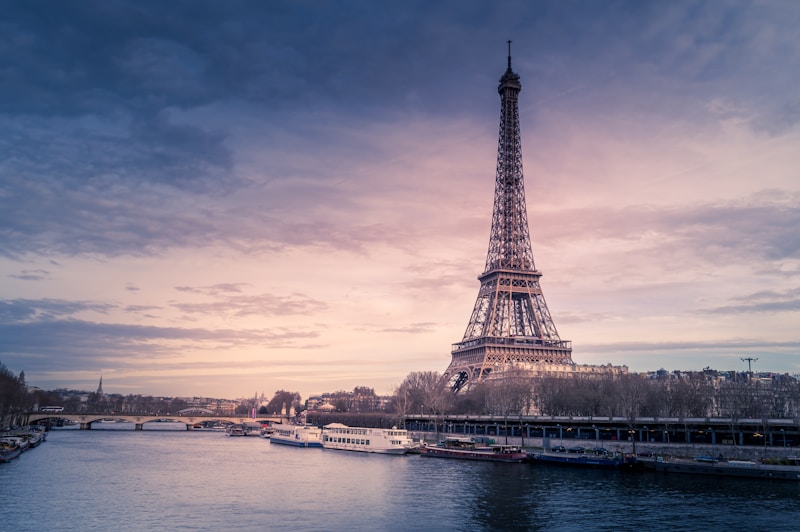
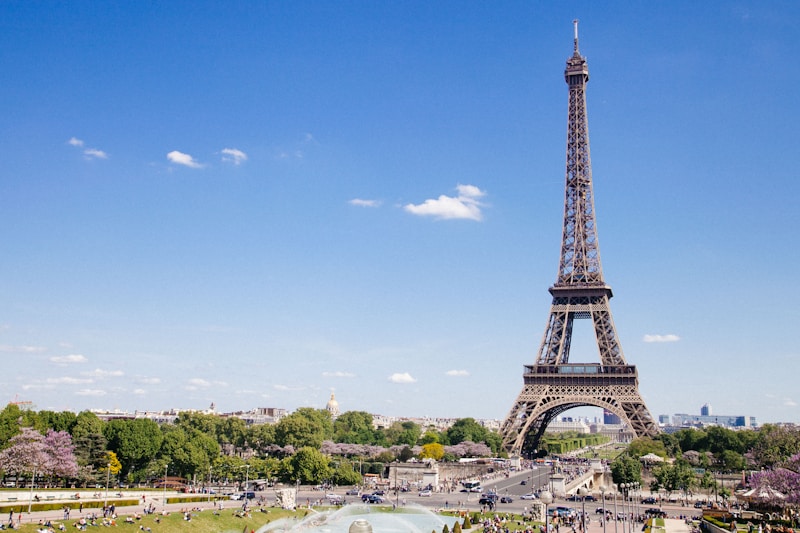
The Eiffel Tower — Yes, you should see it. Yes, it genuinely is as awe-inspiring as advertised, especially when the light show activates after dark on the hour. Book tickets online weeks in advance (entry + lift access to the top costs €28.30 for adults). For the best photograph, don't stand at the Trocadéro with every other tourist — cross to the Champ de Mars and find your own angle, or better still, head to Rue de l'Université in the 7th for a side profile against a quiet residential backdrop.
The Louvre — The world's most visited museum and home to roughly 35,000 works on display (from a collection of over 480,000). A serious visit takes a full day minimum. Pre-book timed-entry tickets (€17) and enter through the Richelieu wing entrance on Rue de Rivoli to avoid the pyramid queues entirely. Don't try to see everything — pick two or three wings and go deep. The French paintings section and the antiquities of Mesopotamia are chronically undervisited and extraordinarily rich.
Musée d'Orsay — Housed in a stunning Beaux-Arts railway station, this is home to the world's greatest collection of Impressionist and Post-Impressionist art: Monet's series paintings, Renoir's Moulin de la Galette, Van Gogh's self-portraits, Degas's dancers. Buy tickets online (€16), and time your visit for a Tuesday or Thursday evening when the museum stays open until 9:45pm and feels more intimate.
Sainte-Chapelle — Perhaps Paris's most underrated monument. Built in 1248 to house the Crown of Thorns, this royal chapel has 15 floor-to-ceiling stained glass windows that transform sunlight into something supernatural. On a bright morning, the upper chapel feels genuinely otherworldly. Far fewer visitors than Notre-Dame, and admission is just €13.
Centre Pompidou — The inside-out architectural provocation of the 1970s now houses one of the world's finest collections of modern and contemporary art. The view from the top-floor terrace across Paris's rooftops is free and spectacular. The surrounding Beaubourg piazza is a lively public space with street performers and the famous Stravinsky Fountain.
Food & Dining in Paris
Eating in Paris is an event, not a task. The city has more restaurants per capita than almost anywhere on earth, a culture that takes the ritual of a meal seriously, and a spectrum running from three-Michelin-star temples of gastronomy down to €4 jambon-beurre sandwiches eaten standing at a zinc bar — and both experiences are authentically Parisian.
The bistro is the essential Parisian institution. Look for handwritten chalkboard menus (ardoise), checked tablecloths, and a patron who seems indifferent to your presence — these are good signs. Classic bistro fare: steak frites with béarnaise, duck confit, croque monsieur, onion soup gratinée, tarte tatin. Reliable addresses include Bistrot Paul Bert (11th), Le Baratin (20th), and Chez Janou (Marais). Expect to pay €30–50 per person with wine.
The brasserie is larger and more boisterous, open longer hours, and ideal for late-night dining or a leisurely Sunday lunch. Brasserie Lipp in Saint-Germain and La Coupole in Montparnasse are institutions. Order the plateau de fruits de mer (seafood tower) and a carafe of Alsatian Riesling.
For street food and quick meals, the Marché d'Aligre (12th, Tuesday–Sunday mornings) is Paris's best food market — dramatically less touristy than Rue Montorgueil — with excellent charcuterie, cheese, wine merchants, and a lively flea market on the square. The area around Rue du Faubourg-Saint-Denis (10th) has a brilliant concentration of Turkish, Indian, and West African food at remarkable prices.
Paris's natural wine scene has exploded over the past decade and the city is now a global reference point for the movement. Bars like La Buvette (11th), Le Verre Volé (10th), and Septime la Cave (11th) have minimal decoration and maximal character. Arrive early — they fill up fast and don't take reservations.
Where to Stay in Paris
The arrondissement you stay in shapes your entire Paris experience. For first-timers, the Marais (3rd/4th) or Saint-Germain (6th) offer central locations within walking distance of major sights, excellent restaurant options, and a genuine neighborhood feel after dark. The 1st and 2nd arrondissements (around the Louvre and Les Halles) are supremely convenient but feel more commercial than residential.
For boutique character, the 9th arrondissement (South Pigalle, nicknamed "SoPi" by locals) has become the most interesting hotel neighborhood in the city — excellent restaurants, a village-like scale, and proximity to both Montmartre and the grands boulevards. Hotels like the Hôtel Amour and Pigalle Paris define the neighborhood's aesthetic: louche, artistic, unapologetically Parisian.
Budget travelers should look at Generator Paris (10th, near Canal Saint-Martin) for quality hostel accommodation, or the many Ibis and B&B Hôtel properties near outer Métro stations — the Métro makes even the 13th or 19th arrondissement viable bases. Mid-range options have expanded significantly, with Marriott's Moxy brand and CitizenM offering stylish rooms at €150–200/night in central locations.
For a splurge, Hotel Le Pavillon de la Reine on the Place des Vosges is the most romantic address in the city — a 17th-century townhouse with a hidden garden courtyard. Hotel Lutetia on the Left Bank has recently been restored to its art deco glory and has one of Paris's finest hotel restaurants.
Day Trips from Paris
Versailles is the obvious choice — the Palace of Versailles and its 800-hectare gardens are 35 minutes from Gare Saint-Lazare or Gare Montparnasse (or 40 minutes on RER C from Musée d'Orsay). Book a timed-entry ticket well in advance (€21). The gardens are free on weekdays outside the summer musical fountain shows. Visit the Grand Trianon and Petit Trianon if you're there for a full day — they see far fewer visitors and are, many would argue, more beautiful than the main palace.
Giverny is Claude Monet's house and gardens — the actual gardens that inspired the Water Lilies. Open April–October, it's 80km from Paris (easiest by car or organized tour). The Japanese bridge and wisteria in late April/May are transcendent. Book entry months ahead; it sells out.
Épernay (1hr 20min by train) is the capital of Champagne country, with the famous Avenue de Champagne lined with the great Champagne houses — Moët & Chandon, Perrier-Jouët, Pol Roger. Most offer cellar tours and tastings; book ahead. The surrounding vine-covered hills are a UNESCO World Heritage landscape.
Loire Valley (1hr by TGV to Tours) contains some of France's greatest châteaux — Chambord, Chenonceau, Amboise — strung along one of Europe's last wild rivers. A two-night extension from Paris is enough to do justice to the highlights by bicycle along the Loire à Vélo trail.
Practical Tips
Language: French is the language of Paris and making even the most minimal effort — bonjour, merci, s'il vous plaît, excusez-moi — earns enormous goodwill. The Parisian reputation for coldness largely disappears when you lead with French, however broken. Most service industry workers in tourist areas speak excellent English.
Tipping: Service is legally included in restaurant bills in France (the service compris line). There is no obligation to tip beyond rounding up or leaving a euro or two for exceptional service. Tipping 15–20% as you might in the US is neither expected nor necessary.
Museum passes: The Paris Museum Pass (€55/2 days, €70/4 days) covers 50+ museums and monuments with skip-the-line entry. It pays for itself quickly if you're doing the major sites, and the queue-skip alone is worth it in peak season. Buy online before you travel.
Water: Paris tap water is excellent — among the best in Europe — and free. The city has hundreds of free public water fountains, some offering sparkling water (the Wallace Fountains are a Parisian icon). You don't need to buy bottled water.
Sundays: Much of Paris slows down on Sundays. Many shops close (though the Marais is an exception — Jewish businesses close Saturday, not Sunday). Markets are at their most vibrant Sunday morning. Museums are often their most crowded. Plan accordingly.
"The real Paris is not the Paris of postcards — it lives in the morning light on a zinc bar, in the specific weight of a good baguette, in a 40-year-old waiter who has seen everything and is mildly contemptuous of all of it."
Budget Breakdown
Paris has a reputation for being expensive, and it can be — but it is also entirely possible to experience the city well without breaking the bank, especially if you eat strategically, use museum free days, and stay slightly off-center.
Budget traveler (€80–120/day): Hostel bed €35–50, meals at markets and formule lunches €25–35, Métro carnet €15, free museum days and parks. Skip dinner restaurants in favor of a good charcuterie board from a fromagerie eaten at a park bench.
Mid-range (€180–280/day): 3-star boutique hotel €150–200, restaurant lunch formule + casual dinner €50–70, museum entry €20–30, transport €10. This is the sweet spot for most visitors.
Luxury (€500+/day): Palace hotel from €400+, starred restaurant dinners €150–300 per person, private tours, premium experiences. Paris at this level is genuinely extraordinary.
Key costs to budget: Eiffel Tower summit €28.30, Louvre €17, Musée d'Orsay €16, Versailles €21, a decent Métro day pass €8.65, a glass of wine at a café €6–10, a café crème €3–5, a baguette tradition €1.30.
Safety in Paris
Paris is a very safe city by global standards, but like all major tourist destinations it has specific zones where petty crime — particularly pickpocketing — is concentrated. The areas around the Eiffel Tower, Sacré-Cœur, Métro line 1 (especially Châtelet and Gare du Nord), and the major tourist sites attract organized pickpocket gangs that target distracted visitors.
Standard precautions apply: use a crossbody bag that closes securely, keep your phone in your front pocket or bag (not on café tables or in back pockets), be wary of anyone approaching you with a clipboard, a petition to sign, or a "found" ring — these are scams. The "friendship bracelet" men at Sacré-Cœur are a long-running scam: they loop a bracelet around your wrist and then demand payment; simply decline and walk away.
The outer suburbs (banlieues) of Paris have a complex reputation that media coverage doesn't always serve accurately. As a tourist, you're very unlikely to have cause to visit them. Within the périphérique (the ring road enclosing the city), all 20 arrondissements are generally safe to walk at any hour, though the northern end of the 18th (above Montmartre) and parts of the 19th and 20th are rougher around the edges at night.
Hidden Gems & Local Favorites

The Promenade Plantée is a 4.7km elevated garden walkway built on a disused railway viaduct — the inspiration for New York's High Line, and far less crowded. It runs from the Bastille opera house through the 12th arrondissement to the Bois de Vincennes, passing above artisan workshops in the converted arches below (the Viaduc des Arts). A perfect afternoon walk.
The Palais Royal gardens, just north of the Louvre, are one of Paris's best-kept open secrets — a calm, colonnaded garden surrounded by antique shops, restaurants, and the famous black-and-white striped columns by Daniel Buren. Parisians sit here on lunch breaks; tourists largely walk past it to the Louvre. Sit here with a coffee and feel like a local.
The Musée de la Chasse et de la Nature (Museum of Hunting and Nature) in the Marais is one of Paris's strangest and most wonderful museums — taxidermied animals in 18th-century salons, contemporary art installations alongside antique hunting weapons, and a genuine atmosphere of eerie beauty. Admission €10 and almost always quiet.
The Piscine Joséphine Baker is a floating swimming pool on the Seine, moored near the Bibliothèque nationale — solar-heated, with a retractable roof, it's an entirely Parisian experience that almost no tourists know about. Day pass around €4.
Paris earns its reputation as the world's greatest city for first-time visitors and a lifetime's worth of returning. The combination of world-class museums, extraordinary food and wine culture, architectural beauty at every turn, and a distinctly Parisian way of life that resists homogenization makes it unlike anywhere else on earth. It rewards those who slow down, eat well, get happily lost, and resist the urge to photograph everything. Come for a week if you can. Come back every few years if you can manage it. The city changes slowly and it changes you each time.
Best season: April–June or September–October | Minimum stay: 5 days | Don't miss: A morning at Sainte-Chapelle, lunch formule in a real bistro, an evening on the Canal Saint-Martin

Comments