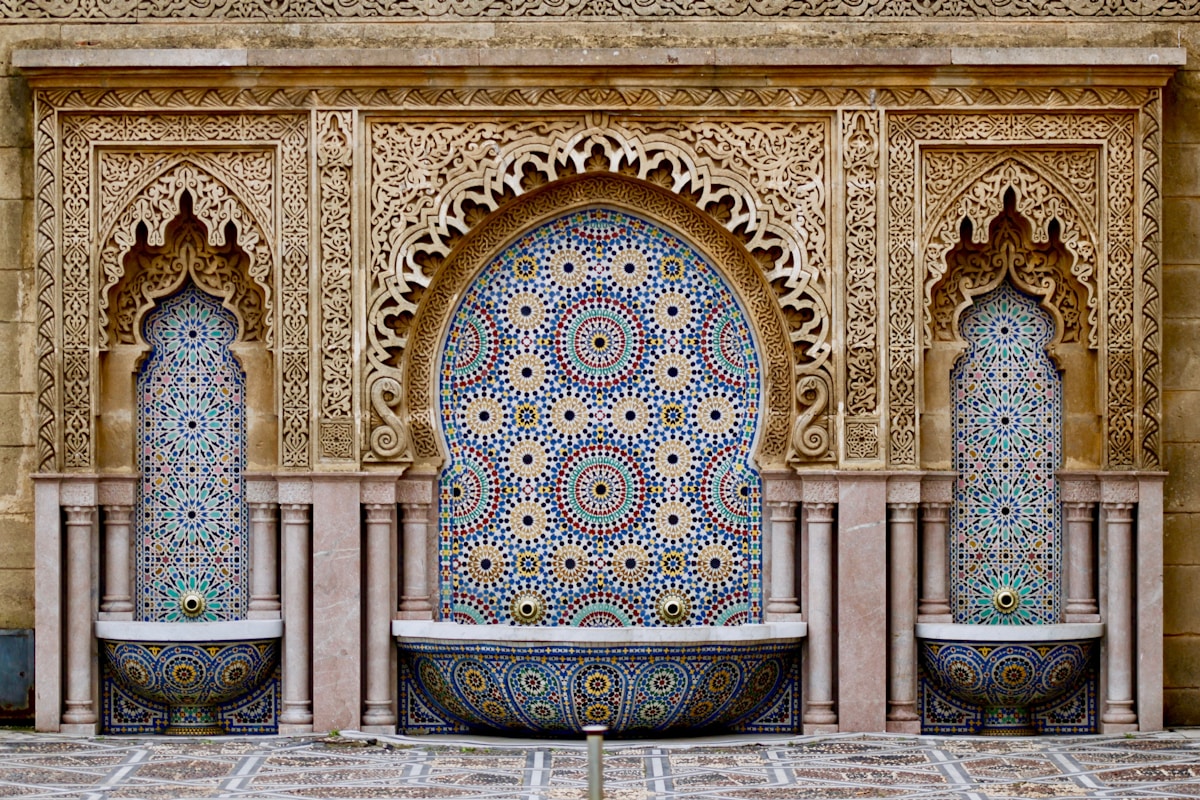
Morocco is the most cinematic country on earth. Nowhere else can you stand at the edge of the Sahara at dawn watching the light turn the dunes from purple to amber to gold, then by afternoon be lost in a 1,000-year-old medina where dyers still work leather in the same stone vats their ancestors used, then by evening be sitting in a mountain guesthouse eating slow-cooked lamb tagine while the call to prayer echoes across tiled rooftops. Morocco contains multitudes, and it delivers them with an intensity that leaves travelers changed.
This guide covers the full picture — the imperial cities (Fez, Marrakech, Meknes, Rabat), the Sahara, the Atlas Mountains, the Atlantic and Mediterranean coasts — with practical advice that goes beyond the well-worn tourist trail. Morocco is not difficult to travel; it does require a little preparation and a willingness to surrender to its rhythms. The rewards are extraordinary.
When to Visit Morocco
Morocco spans a remarkable range of climates for a country of its size. The coast is Mediterranean-influenced, the Atlas Mountains can have snow in winter, the Sahara is extreme desert, and the Rif Mountains in the north are subtropical and lush. Timing your visit depends enormously on which parts of the country you plan to prioritize.
Spring (March–May) is the near-universal consensus for the best time to visit. Temperatures are mild across all regions — Marrakech averages 20–25°C (68–77°F), the Atlas is clear and green, and the Sahara is warm but not brutal at 28–32°C. Wildflowers cover the hillsides and the country feels genuinely at its most beautiful. This is also the period of the Fès Festival of World Sacred Music (usually June) — one of the world's great cultural festivals.
Autumn (September–November) is equally good, arguably better for the Sahara where spring can bring sandstorms. Temperatures have come off their summer peak, the tourist crowds have thinned, and harvest season in the Dades and Drâa valleys (rose harvest in late April/May, date harvest in October) adds a seasonal dimension. Marrakech hosts its major art fair in late October.
Summer (June–August) is extreme in inland cities — Fez and Marrakech frequently hit 40°C+ (104°F+) in July and August. The coast, however, is delightful: Atlantic Essaouira has consistent trade winds keeping temperatures at 22–26°C while the interior bakes, and Agadir draws beach tourism year-round. The Sahara in summer is dangerously hot (50°C+) and best avoided entirely.
Winter (December–February) sees cold nights across most of the country, snow at altitude (the ski resort of Oukaimeden above Marrakech operates December–March), and occasional rain in the north. Marrakech stays mild by day at 15–18°C, making cultural visits very comfortable. This is low season with dramatically reduced prices and almost no queues at major sites.
Getting to Morocco
Morocco is excellently served from Europe, particularly from the UK, France, Spain, and the Netherlands. Low-cost carriers including Ryanair, easyJet, and Transavia operate dense networks of direct flights to Marrakech Menara (RAK), Casablanca Mohammed V (CMN), Fez (FEZ), Agadir (AGA), and Tangier (TNG). From the US, Royal Air Maroc operates direct flights from New York JFK to Casablanca in around 7.5 hours, with connections to all domestic airports.
Casablanca Mohammed V Airport is the main international hub, but unless you're visiting Casablanca specifically, connecting onwards by domestic flight or train is usually the right move — Royal Air Maroc and Air Arabia Maroc both offer cheap domestic connections. The train from Casablanca's airport to Marrakech (via Casa-Port station) takes about 3.5 hours and is comfortable and reliable.
For travelers coming from southern Spain, the Tangier-Med ferry crossing from Tarifa or Algeciras is a thrilling way to arrive — the Strait of Gibraltar crossing takes 35–45 minutes and the experience of watching Europe disappear behind you and Africa appear is genuinely memorable. Tangier itself has been dramatically revitalized and is worth at least a day or two.
Getting Around Morocco
Morocco has invested significantly in transportation infrastructure. The Al Boraq high-speed rail line connects Tangier to Casablanca in 2 hours 10 minutes at 320km/h — Africa's first high-speed railway. ONCF national trains connect Casablanca to Rabat (45 min), Fez (2.5 hrs from Rabat), and Marrakech (3 hrs from Casa). Trains are clean, punctual, and excellent value in first class (roughly €15–25 for most intercity journeys).
CTM buses connect cities not served by rail — including Essaouira, Agadir, Ouarzazate, Merzouga, and the deep south. The premium CTM service is reliable and air-conditioned; book at least a day ahead during high season. Supratours (operated by ONCF) integrates with rail tickets for onward bus connections and is similarly good.
Grand taxis (shared long-distance taxis, usually Mercedes 190 or similar) fill in the gaps — shared with up to 5 other passengers, they depart when full and serve smaller towns on fixed routes. They're cheaper than buses and faster on direct routes, but can involve waiting. Negotiate the price before you get in if you're taking the whole taxi privately (taxi complet).
Renting a car is highly recommended for anyone planning to explore the Atlas Mountains, the Drâa Valley, or the Sahara circuit. Local companies (Sixt, Europcar, and local operators like Best Car) are available at major airports. A small hatchback runs about €25–40/day. Roads are generally good — the N9 over the Tizi-n-Tichka pass is spectacular and well-surfaced, the pistes (unpaved tracks) into the deep desert require a 4WD.
The Imperial Cities: Morocco's Cultural Core
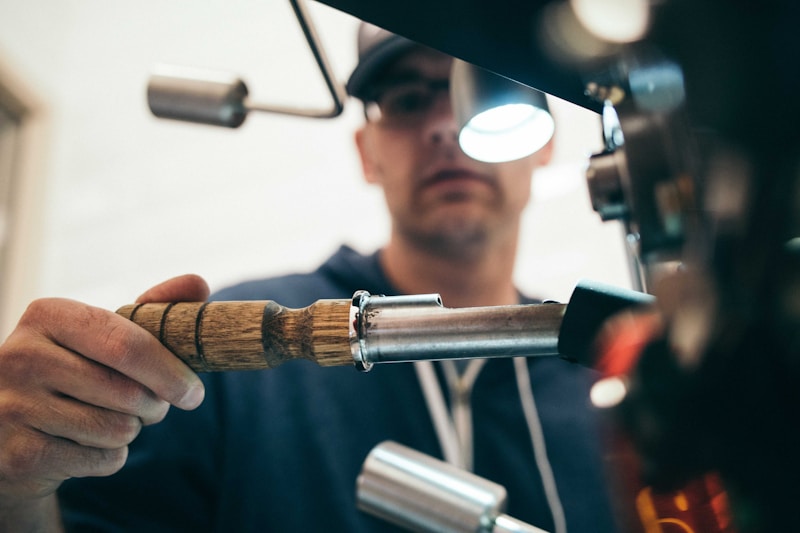
Marrakech is most travelers' entry point and deservedly so. The Djemaa el-Fna square — UNESCO's only "intangible cultural heritage" site — is one of the world's great public spaces: by day it's a marketplace of snake charmers, henna artists, and orange juice sellers; by night it transforms into a vast open-air restaurant and entertainment complex with smoke-breathing storytellers, acrobats, and Gnawa musicians performing for gathered crowds. The medina behind the square holds the souks (divided by craft — metalworkers, leatherworkers, spice sellers, weavers), the Bahia Palace, the Saadian Tombs, and the superb Yves Saint Laurent Museum that opened in 2017 in a stunning purpose-built building adjacent to the Majorelle Garden.
Fez (Fès) contains arguably the most intact medieval city in the Arab world. Fès el-Bali, the ancient walled medina, is a UNESCO World Heritage site of over 9,000 lanes and alleys where there are no motor vehicles — only donkeys and pedestrians. The Bou Inania Madrasa, the Al-Attarine Madrasa, the Chouara Tanneries (best viewed from the rooftop leather shops overlooking the vats), and the Zawiya of Moulay Idriss II define the spiritual and architectural core. Fez is more intellectually serious than Marrakech, less tourist-saturated (though this is changing), and deeper in every sense. Budget three full days minimum.
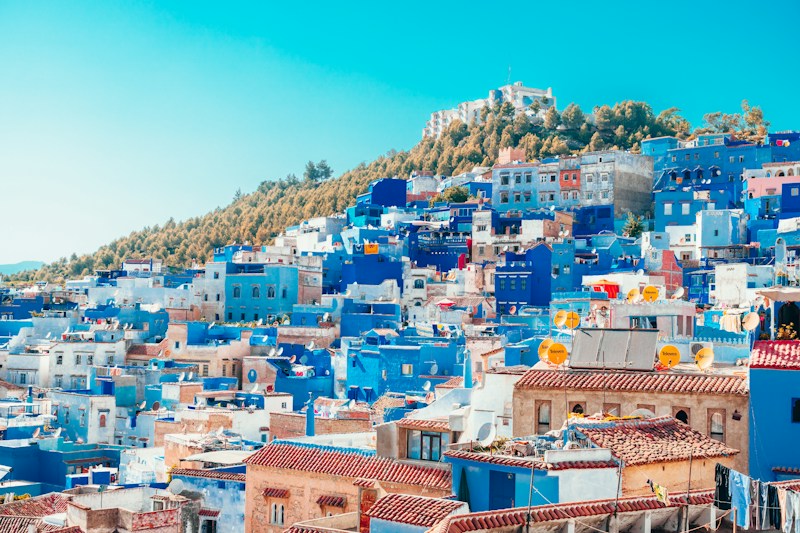
Chefchaouen — the "Blue City" of the Rif Mountains — is one of the world's most photographed places, a mountain town of indigo and cobalt-painted streets that dates to the 15th century. It's become overwhelmingly popular in recent years (Instagram is largely responsible), but arrive before 8am and you'll still experience something genuinely magical. The surrounding Rif mountains offer excellent hiking to natural pools at Ain Tissimane and to the Spanish mosque above town for panoramic views. Stay two nights.
Rabat, the capital, is Morocco's most underrated city — cosmopolitan, calm, with excellent museums (the Mohammed VI Museum of Modern and Contemporary Art is outstanding), the atmospheric Kasbah des Oudaïas above the Atlantic shore, and a medina that is far less harassed than Marrakech's. It's a city where Moroccans actually live, and the experience of walking its streets feels correspondingly more authentic.
"In Fez, time doesn't move the way it does elsewhere. You enter the medina through a gate built in the 9th century and suddenly the modern world becomes irrelevant. The leather dyers, the muezzin, the smell of cedars and spices — this is a city that has been itself, continuously, for over a thousand years."
The Sahara Desert: Morocco's Greatest Natural Wonder
The Sahara is the defining extraordinary experience of Moroccan travel, and the approach matters enormously. The classic route from Marrakech crosses the High Atlas via the Tizi-n-Tichka pass, descends into the Drâa Valley through Ouarzazate (Morocco's "Hollywood" where Lawrence of Arabia, Gladiator, and Game of Thrones were filmed at the Atlas Studios), passes the rose-growing town of Kelâat M'Gouna, the gorges of the Dadès Valley, and arrives at the sand sea of Erg Chebbi near Merzouga — the most spectacular dune field in Morocco, rising to 150 meters.
The Erg Chebbi experience requires spending at least one night in a desert camp to be worthwhile. Basic camps with Berber tents, camel rides, and a communal dinner under the stars cost about €50–80 per person. Mid-range luxury camps (private ensuite tents, hot showers, gourmet dinners) run €150–250. The absolute pinnacle is the Scarabeo Camp or Erg Chebbi Luxury Camp — glamping at its most authentic. Camel trekking at sunset and a 4am wake-up to watch the dunes change color at dawn are indelible experiences.
An alternative is the Erg Chigaga, accessed from M'Hamid at the end of the Drâa Valley — a more remote, higher-dune desert with far fewer visitors than Erg Chebbi and a wilder, more extreme feel. Access requires a 4WD or organized tour (about 50km of piste from M'Hamid). If you have the time and the logistics, Erg Chigaga delivers the most authentic Saharan experience in Morocco.
The Atlas Mountains & Hiking
The High Atlas Mountains form a spine across central Morocco and contain North Africa's highest peak, Jebel Toubkal at 4,167 meters. The Toubkal circuit is Morocco's most popular trekking destination — the standard two-day ascent from the village of Imlil requires no technical climbing skills but decent fitness, with a night in the Toubkal refuge at 3,207m. In summer (July–September) this is a straightforward mountain hike; in winter it requires crampons and ice axes. The views from the summit across the Atlas and south toward the Sahara on a clear day are extraordinary.
Beyond Toubkal, the M'Goun massif further east offers a week-long traverse through genuine Berber villages with little tourist infrastructure — pure adventure trekking with mule support. The Aït Benhaddou ksar (a UNESCO World Heritage fortified village that served as the set for dozens of Hollywood productions) is accessible from the Atlas circuit and essential to visit.
The Ourika Valley, just 30km from Marrakech, offers a quick escape from the city into green terraced hillsides and Berber villages — a popular day trip for both tourists and Marrakechis escaping the summer heat. Waterfalls at Setti Fadma make the endpoint rewarding. Accessible by grand taxi from Marrakech's Bab Rob gate.
The Atlantic Coast: Essaouira & Beyond
Essaouira is Morocco's most relaxed and atmospheric coastal city — a blue-and-white walled port town with a massive 18th-century rampart overlooking the Atlantic, a wind-swept beach beloved by kitesurfers, and a medina that somehow manages to retain its soul despite steady tourist interest. The wind blows almost constantly (Essaouira means "the well-designed" in Berber, but locals call it "the windy city"), keeping temperatures cooler than inland cities. The wood-carving artisans in the medina work with thuja root — a fragrant local wood found nowhere else — producing objects of genuine craftsmanship.
The drive south along the coast from Essaouira passes argan trees (found only in this part of Morocco) where goats famously climb the branches to eat the fruit — a genuinely bizarre sight. This region produces almost all the world's argan oil. Visit a women's argan oil cooperative for a legitimate direct-purchase experience and to understand the ecological and economic importance of this unique tree.
The surf coast around Taghazout north of Agadir has become West Africa's premier surfing destination, with consistent Atlantic swells, excellent surf camps, and a beach town infrastructure that has grown dramatically in recent years while still retaining a low-key character. Yoga retreats, surf lessons, and seafront restaurants eating the morning's catch make this an excellent week-long base.
Food & Eating in Morocco

Moroccan cuisine is one of the world's great culinary traditions — a synthesis of Berber, Arab, Moorish Andalusian, Jewish, and French influences that produces extraordinary depth of flavor from slow-cooking, aromatic spicing, and exceptionally high-quality local produce.
The tagine is the defining dish — slow-cooked in a conical clay pot over charcoal or gas, with countless regional variations. Lamb tagine with prunes and almonds (Marrakchi style), chicken with preserved lemon and olives, kefta meatballs in tomato sauce with eggs, and vegetable tagines with cumin and paprika are all equally extraordinary when done properly. Avoid the tourist-facing tagines in Djemaa el-Fna square and instead seek out neighborhood restaurants off the main drag — Ali Baba in Fez's ville nouvelle, the women's cooperative restaurant Souk Kefah in Marrakech's medina, and any family guesthouse (riad) kitchen.
Couscous is the Friday ritual dish, traditionally steamed three times in a couscoussière and served with slow-cooked lamb or chicken and seven vegetables. Moroccan families eat it at Friday lunch; you'll find it in most restaurants on Fridays. The couscous royale — with lamb, merguez, and chicken — is the extravagant restaurant version.
Moroccan breakfast is a feast: khobz (round flatbread), msemen (layered flaky flatbread), baghrir (spongy "thousand holes" pancakes), fresh-squeezed orange juice, argan oil with amlou (almond-honey-argan paste), olive oil, honey, and the sweetest Moroccan mint tea — poured from height to create a froth. Most riads include breakfast; it is always worth the premium.
Street food is extraordinary: bissara (dried fava bean soup with olive oil and cumin, €0.50–1 at roadside stalls) is Morocco's national morning dish; merguez sandwiches from carts are everywhere; msemen with honey or kefta is perfect after a long souk walk. The mechoui (whole roasted lamb) sellers in Marrakech's medina near the Djemaa serve lunch portions carved to order — deeply fragrant, falling-off-the-bone tender.
Staying in Morocco: The Riad Experience
The riad — a traditional Moroccan house built around a central courtyard with a fountain — is the defining accommodation experience of the country, and staying in one rather than a generic hotel transforms the experience entirely. From the street, a riad door is unremarkable; inside, they open into courtyards of intricate zellige tilework, carved stucco, cedar woodwork, and citrus trees. Breakfasts are served on rooftop terraces with panoramic medina views. Many riads have hammams.
Marrakech has hundreds of riads ranging from budget (€40–60/night for a basic double) to ultra-luxury (Riad Mena & Beyond, La Mamounia's riad suites — €500+). The Riad Yima, decorated by artist Hassan Hajjaj, is an affordable art experience as much as an accommodation. El Fenn is the gold standard of mid-luxury. For pure romance and simplicity, dozens of owner-operated riads with 4–8 rooms in the medina offer personal service that no hotel can match at €80–150/night.
In Fez, the Riad Fes and Riad Laaroussa are benchmark addresses. In Chefchaouen, the Riad Cherifa and Casa Perleta are outstanding small guesthouses. In Essaouira, the riads along Rue Laalouj and in the northern medina offer excellent value with Atlantic views.
Navigating the Souks: A Practical Guide
The Moroccan souk experience is one of the world's great sensory adventures — and one of the most anxiety-inducing for first-time visitors. The pressure from touts and guides, the maze-like structure of the medinas, and the haggling culture can feel overwhelming. Here's how to navigate it confidently.
Unofficial guides: In Marrakech and Fez, young men will approach offering to "show you to the tanneries" or "help you find your riad" — this is a well-established system that ends in a commission-earning shop visit. You are not obligated to follow anyone. A firm but polite "la shukran" (no thank you) is sufficient. Official guides licensed by the Moroccan Ministry of Tourism wear ID and offer structured half-day or full-day medina tours that are genuinely informative and worth the cost (€20–40).
Haggling: Fixed prices are rare in the souks. The standard advice — offer 30–40% of the first asking price and work toward a middle — remains roughly accurate, though increasingly vendors in tourist-heavy areas open at more realistic prices. The key is to genuinely want to buy before you start negotiating, and to be willing to walk away. If the seller calls you back, you have more leverage. If they don't, the price you left was already the market price.
What to buy: Genuine Moroccan craftsmanship is outstanding. Leather goods (babouche slippers, bags, jackets) from Fez are world-quality; the Chouara tanneries are the source. Hand-knotted Berber rugs from the Atlas villages (Beni Ourain wool rugs are the global design icon — geometric black patterns on cream ground) are excellent investment pieces. Argan oil direct from a cooperative. Silver jewelry from the Tuareg-influenced south. Ceramic tagines and tea services from Fez's potters quarter, Ain Khlota.
"Morocco teaches patience. The best souks, the best food, the best views — they all require you to slow down, get a little lost, and stop optimizing your experience. The country rewards surrender."
Day Trips & Regional Excursions
From Marrakech: The Ourika Valley (30min) for mountain scenery; Aït Benhaddou (2.5hrs) for the UNESCO ksar; Essaouira (2.5hrs) for the coast; the High Atlas and Imlil (1.5hrs) for hiking. A day trip combining the Tizi-n-Tichka pass with Aït Benhaddou and the Ouarzazate kasbah is a classic and can be done by rental car or organized tour.
From Fez: Meknes (45 min by train) — Morocco's most undervisited imperial city, with the extraordinary Bab Mansour gateway, the Heri es-Souani granary, and proximity to the Roman ruins of Volubilis (25km further, a UNESCO site of Moroccan-Roman antiquity with some of the finest mosaics in North Africa). Chefchaouen (3hrs by CTM bus or grand taxi) is a manageable day trip but deserves an overnight.
Practical Tips for Morocco
Language: Morocco is officially Arabic-speaking (Darija — Moroccan Arabic dialect — is the everyday vernacular) and Tamazight (Berber) has official status. French is widely spoken in cities, tourism, and business — it is the most useful second language for travelers. In the north (Tangier, Chefchaouen, Tetouan), Spanish is also widely understood. English is increasingly common in tourist areas but less prevalent than French outside Marrakech.
Currency: The Moroccan Dirham (MAD) is not freely convertible outside the country — you must exchange on arrival. ATMs are widely available in cities and dispense dirhams on major cards; commission-free exchange at banks is standard. Cash is essential in rural areas, souks, and smaller restaurants. Keep small notes for tips, hammam entrance fees, and market purchases.
Tipping: Tipping is expected and appreciated across Morocco. Hotel bellboys: MAD 10–20; restaurant servers: 10% (or round up for budget restaurants); hammam attendants: MAD 20–30; tour guides: MAD 100–200 for a half-day; drivers: MAD 50–100/day. Being generous here matters — wages in the tourism sector are modest and tips represent a significant income supplement.
Hammam: The traditional Moroccan steam bath is both a hygienic and social institution, and experiencing a local hammam (rather than a hotel spa version) is one of Morocco's great cultural pleasures. Pay MAD 10–20 entry, bring flip flops and a towel, and ask for a "kessa" scrub (exfoliation with a rough glove) and optional "savon beldi" (black olive soap) treatment. You'll emerge feeling renewed. Ask your riad for a recommendation of a neighborhood hammam rather than a tourist-oriented one.
Budget Breakdown for Morocco
Morocco is one of the world's best-value travel destinations for the quality of experience offered. It is possible to travel extremely well on a modest budget, and even luxury here is priced far below comparable experiences in Europe.
Budget traveler (MAD 400–600/day / ~€37–55): Basic riad or guesthouse double MAD 200–300, street food and local restaurants MAD 80–120, local buses and grand taxis MAD 50–80, medina entry/guides MAD 50–100. Morocco's street food, markets, and public spaces make budget travel genuinely rich.
Mid-range (MAD 1,000–1,800/day / ~€90–165): Good riad with breakfast MAD 500–700, restaurant meals MAD 200–300, organized excursions and drivers MAD 300–500. This is an excellent tier — riads at this price are beautiful, food choices excellent.
Luxury (MAD 3,000+/day / €275+): La Mamounia or equivalent from MAD 2,500+, fine dining MAD 500–800, private driver MAD 500–800/day, private desert camp. Morocco's top luxury tier is genuinely world-class at prices well below comparable European standards.
Safety in Morocco
Morocco is one of the safer countries in North Africa and the Arab world for international tourists. Violent crime against tourists is rare; the main issues are petty theft (pickpocketing in crowded medinas, particularly Djemaa el-Fna), aggressive tout behavior, and scams targeting new arrivals (fake guides, carpet shop commissions, overcharging at tourist-facing restaurants). These are manageable with awareness rather than genuinely dangerous.
Solo female travelers should be aware that harassment can be an issue, particularly in Marrakech and Fez medinas and in some rural areas. Dressing conservatively (shoulders and knees covered), wearing sunglasses to avoid eye contact, and responding with confident indifference to unwanted attention is the most effective approach. Traveling with a local guide for medina exploration reduces this significantly. Many solo female travelers have extraordinary experiences in Morocco — it requires more situational awareness than comparable European destinations, not avoidance.
The political situation in Morocco is stable. The country has good relations with the West and Western tourism is warmly welcomed. Health infrastructure in major cities is adequate; comprehensive travel insurance including medical evacuation is strongly recommended for adventure activities and desert excursions.
Morocco is the most rewarding destination in the Mediterranean basin for travelers seeking genuine cultural depth, dramatic landscapes, extraordinary food, and exceptional value. Its diversity — from Saharan dunes to Atlantic surf, from 1,000-year-old medinas to contemporary Casablanca art galleries — is unmatched within any similarly sized country. It is not always an easy destination: the medinas demand navigation, the haggling culture requires equanimity, and the sensory overload is real. But Morocco rewards those who engage with it openly and generously, offering encounters with hospitality, craft, cuisine, and landscape that remain vivid for years afterward. Come for two weeks if you can. The country cannot be rushed.
Best season: March–May or September–November | Minimum stay: 10 days to do it justice | Don't miss: Fès el-Bali at dawn, a night in the Sahara, the Todra Gorge, a traditional riad breakfast
Comments